Mutual Divorce in India
A dignified and efficient legal solution for couples seeking separation. Here are the key requirements and procedures.
What is Mutual Divorce?
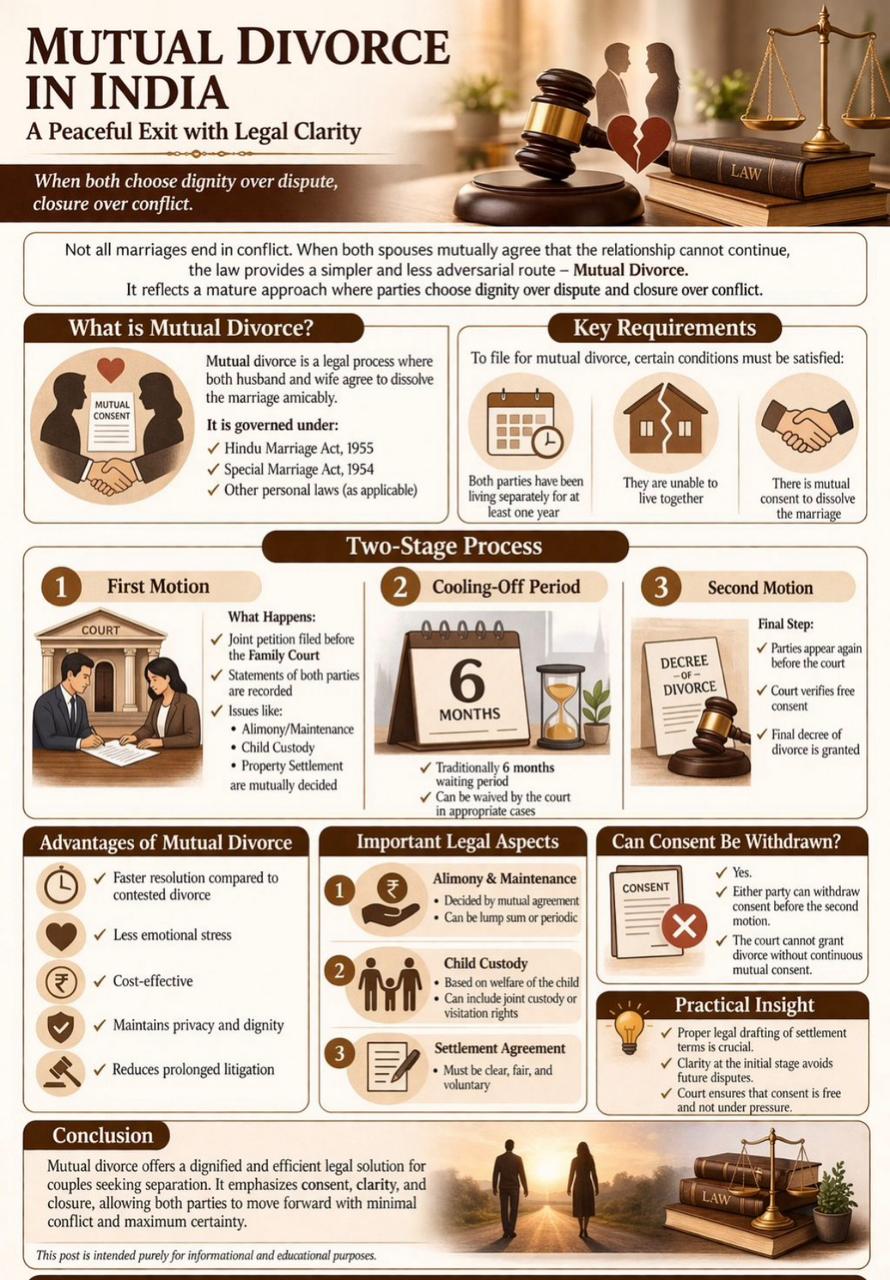
A legal process where both husband and wife agree to dissolve the marriage amicably. It is governed under the Hindu Marriage Act (1955), Special Marriage Act (1954), and other applicable personal laws.
Key Requirements
- Both parties have been living separately for at least one year.
- They are unable to live together.
- There is mutual consent to dissolve the marriage.
"Drafting is not clerical work. Drafting is advocacy in writing."
Strong drafts reduce arguments. Weak drafts destroy strong cases. Proper legal drafting of settlement terms is crucial for continuous mutual consent.
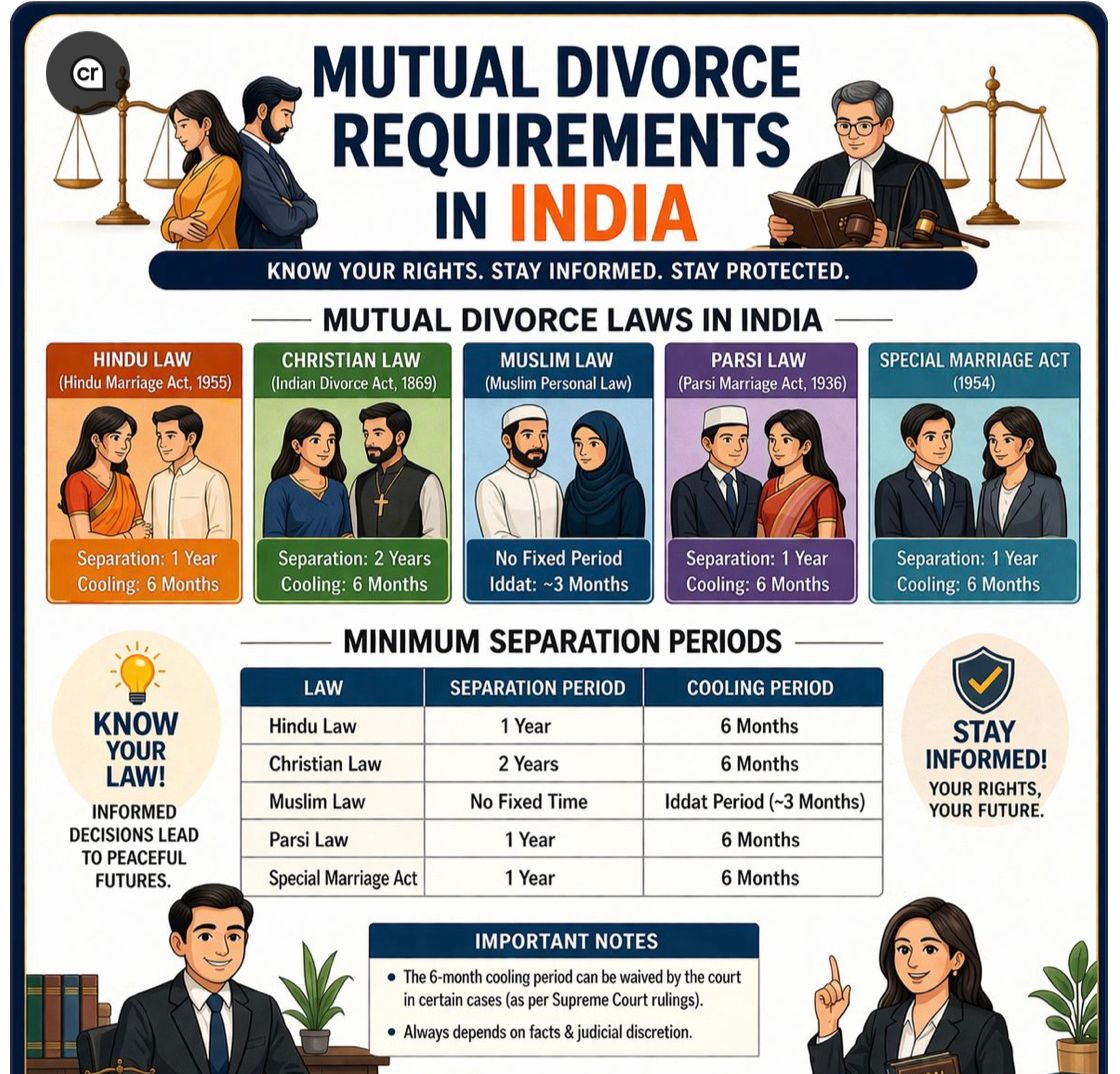
Minimum Separation Periods
| Law | Separation | Cooling Period |
|---|---|---|
| Hindu Law | 1 Year | 6 Months |
| Special Marriage Act | 1 Year | 6 Months |
| Christian Law | 2 Years | 6 Months |
| Parsi Law | 1 Year | 6 Months |
| Muslim Law | No Fixed Period | Iddat (~3 Months) |
Note: The 6-month cooling period can be waived by the court in certain cases (as per Supreme Court rulings), always depending on facts & judicial discretion.
The Two-Stage Process & Key Aspects
1. First Motion
Joint petition filed, statements recorded. Issues like alimony, custody, and property are decided.
2. Cooling-Off
Traditionally a 6-month waiting period. Either party can withdraw consent before the second motion.
3. Second Motion
Parties appear again, court verifies free consent, final decree of divorce is granted.